An educational exploration of how meal structures and eating habits develop through early life stages.
Published February 2026 | Educational Article
Eating patterns during childhood and adolescence are shaped by a complex interplay of developmental factors, family influences, school schedules, and emerging independence. These early life stages establish foundational eating habits that often evolve significantly as young people progress from complete dependence on parents to increasing autonomy in food choices.
This article explores the general patterns observed in how children and adolescents structure their daily meals, acknowledging that individual variation is substantial and influenced by family culture, socioeconomic circumstances, geographic location, and personal preferences.
Young children, typically those in primary school years, generally follow meal patterns established and maintained by parents or caregivers. These patterns are often quite structured, with regular meal times coordinated around school schedules and family routines.
A typical pattern for school-aged children might include breakfast at home before school, usually between 7:00 AM and 8:30 AM. Many families maintain consistent breakfast routines on school days to coordinate with departure times and ensure children have eaten before beginning their school day.
Mid-morning snacks are common in many primary schools, with designated snack times allowing children to eat fruit or other small items. These snack periods typically occur between 10:00 AM and 11:00 AM and serve both nutritional and practical purposes within the school day structure.
Lunch during school days is usually consumed between 12:00 PM and 1:00 PM, either through school meal programs or packed lunches prepared at home. The school lunch period represents a significant social context where children eat alongside peers, potentially influencing their food preferences and eating behaviors.
After-school snacks are common when children return home, typically between 3:30 PM and 5:00 PM. These snacks often occur in the period between the end of school and family dinner, helping children manage hunger during this gap.
Evening meals for families with young children commonly occur between 5:30 PM and 7:00 PM, earlier than typical adult dinner times to accommodate children's bedtime schedules. Family dinner represents an important social context in many households, though the frequency and structure of shared family meals varies considerably among families.
As children progress into adolescence, eating patterns often become less structured and more influenced by peer relationships, increasing independence, and changing daily schedules. Teenagers typically gain more autonomy over their food choices, though family influence remains significant for most adolescents.
Breakfast patterns among adolescents show considerable variation. Some teenagers maintain regular breakfast habits established in childhood, eating at home before school. Others may skip breakfast entirely or eat irregularly, influenced by factors including sleep schedules, time constraints, and personal preferences. Those who do eat breakfast typically do so between 6:30 AM and 8:00 AM on school days.
School lunch remains a central eating occasion for most adolescents, though secondary school environments often provide more food choice options than primary schools. Teenagers may purchase food from school cafeterias, bring packed lunches, or sometimes purchase food from nearby shops where school policies permit. Lunch timing typically falls between 12:00 PM and 1:30 PM.
After-school eating patterns become more variable during adolescence. Some teenagers eat substantial snacks after school, while others may have minimal food intake between lunch and dinner. After-school activities including sports, clubs, and part-time employment can significantly influence eating timing and patterns.
Dinner timing for adolescents varies based on family schedules and the teenager's activities. Families may eat together, typically between 6:00 PM and 8:00 PM, though teenagers with evening activities may eat separately or at different times. The frequency of family dinners tends to decrease somewhat during adolescence compared to childhood, though this varies considerably among families.
Evening snacking becomes more common during teenage years, with many adolescents eating snacks during homework time or social activities in the evening. This pattern reflects both increased independence in accessing food and later bedtimes compared to younger children.
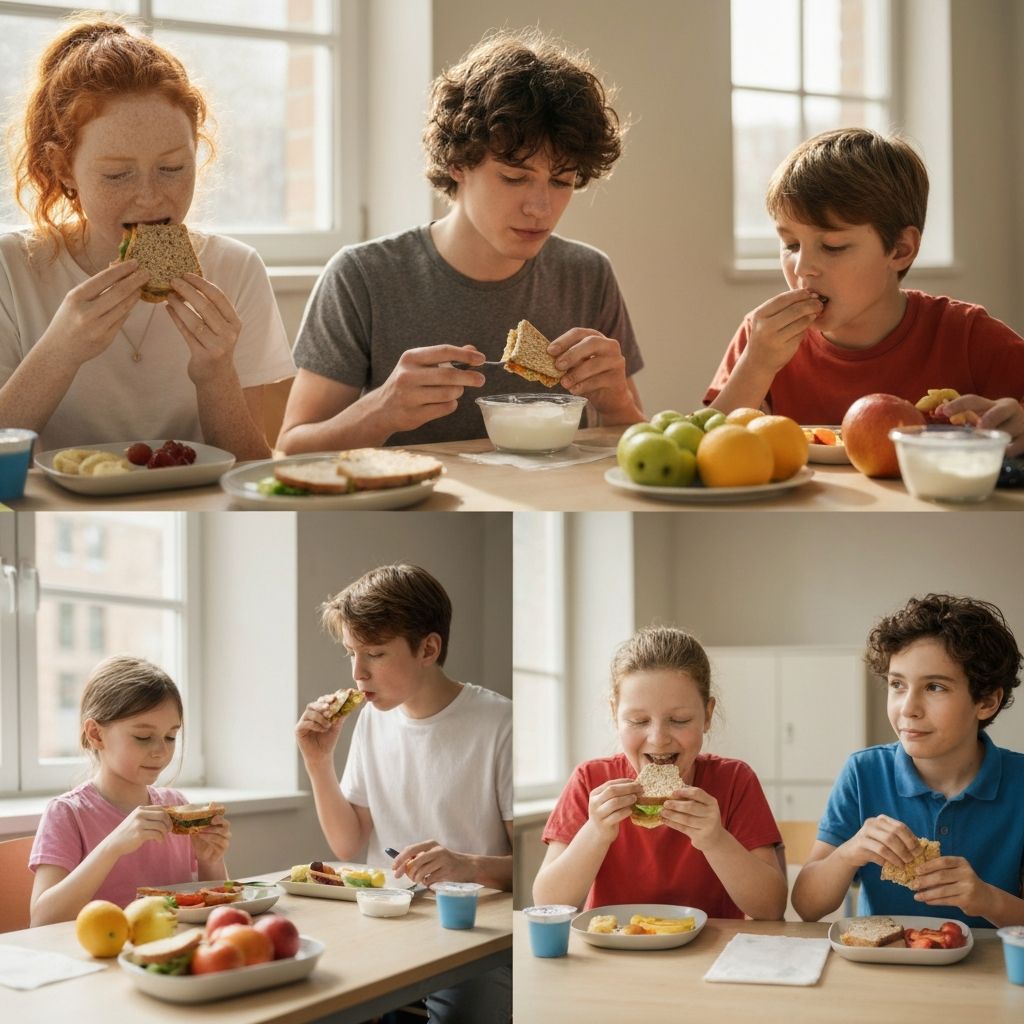
School schedules exert substantial influence on eating patterns throughout childhood and adolescence. The timing of the school day, designated meal periods, and after-school activities create a temporal structure around which eating patterns are organized during term time.
Weekend and holiday eating patterns often differ noticeably from school day patterns. Without school schedules to structure the day, meal timing may become more flexible, and the composition of meals may differ from weekday patterns. Weekend breakfasts, for example, might occur later and be more relaxed than rushed weekday morning meals.
School holiday periods may see significant changes in eating patterns, with less structured meal times and potentially different food choices reflecting the more relaxed daily schedule. These holiday patterns often revert to more structured routines when school resumes.
Family culture and practices profoundly influence children's and adolescents' eating patterns. Families establish norms around meal timing, the importance placed on shared meals, food preferences, and attitudes toward eating that shape young people's habits.
Cultural background significantly affects meal patterns, with diverse cultural traditions within the UK contributing to variety in meal structures, timing, and food choices. Some cultural traditions emphasize particular meal times, specific types of foods for certain occasions, or distinct approaches to family eating.
Parental work schedules impact family meal patterns, potentially affecting when and how often families eat together. Families with parents working shift patterns or irregular hours may develop different meal timing patterns than families with standard work schedules.
Socioeconomic factors influence eating patterns through effects on food availability, time available for meal preparation, access to school meal programs, and the types of food choices available to families. These factors interact with many others to shape the specific patterns observed in different households.
The social contexts in which children and adolescents eat evolve throughout these life stages. Young children typically eat primarily with family members and classmates at school. As children grow older, peer influence on eating habits increases, particularly during adolescence.
School lunchrooms represent important social environments where eating occurs in peer groups. The social dynamics of these settings can influence food choices, eating behaviors, and attitudes toward food. For some young people, the social aspects of school lunch are as significant as the food itself.
During adolescence, eating in social contexts outside the family becomes more common. Teenagers may eat with friends at restaurants, cafes, or fast food establishments, representing increasing independence and the growing importance of peer relationships during this life stage.
Childhood and adolescence are periods during which food preferences develop and evolve. Young children's preferences are initially heavily influenced by family food culture and what parents provide. As children age, exposure to diverse foods at school, friends' homes, and through media gradually expands their food experiences.
Adolescence often brings experimentation with different foods and eating patterns as teenagers explore identity and independence. Peer influence becomes more prominent, and teenagers may adopt eating preferences popular among their social groups or distinct from their family's patterns.
Individual taste preferences vary enormously among children and adolescents, influenced by biological factors, exposure history, and personal experiences with different foods. Some young people are more adventurous eaters, willing to try diverse foods, while others prefer familiar options.
Extracurricular activities significantly influence eating patterns for many children and adolescents. Sports participation may affect meal timing, with early morning practices requiring adjusted breakfast schedules or evening activities delaying dinner times.
Children and teenagers involved in multiple activities may have particularly complex eating schedules, sometimes requiring flexibility in meal timing to accommodate various commitments. Families often adapt meal patterns to work around children's activity schedules.
Part-time employment among older adolescents introduces additional schedule constraints that can affect eating patterns. Teenagers working after school or on weekends may eat meals at different times than their non-working peers or have less regular meal patterns.
The patterns described in this article represent general observations and do not apply uniformly to all children and adolescents. Individual eating patterns vary enormously based on family circumstances, cultural background, personal preferences, health considerations, and countless other factors.
This educational content describes diversity and context in eating patterns without suggesting that specific patterns are optimal or appropriate for all young people. Decisions about children's and adolescents' eating habits are personal family decisions, appropriately made by parents and caregivers based on their specific circumstances and in consultation with appropriate professionals when needed.
The information presented is observational and educational in nature, not prescriptive. We acknowledge that healthy, well-functioning eating patterns can take many different forms, and there is no single correct way for children and adolescents to structure their meals.
Learn about eating patterns in other life stages through our educational articles.
View All Articles